
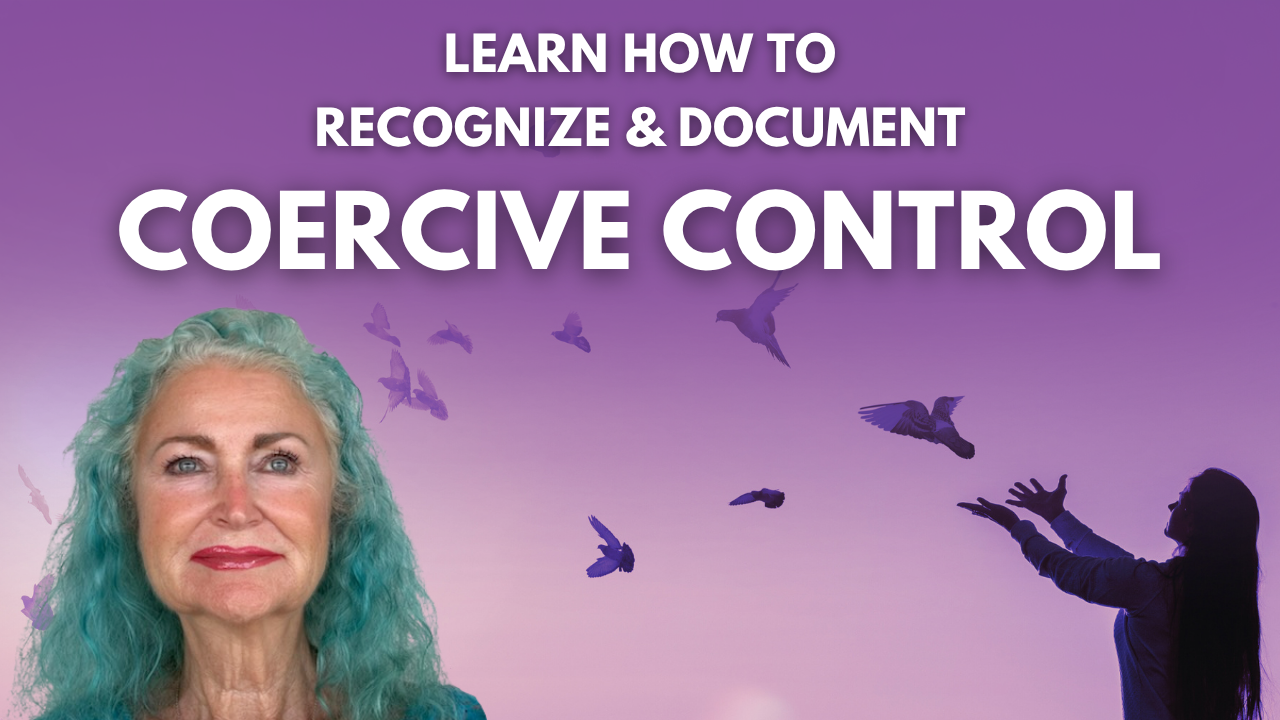
Documenting Coercive Control Training for Christian Therapists with Ruth Darlene, WomenSV
Learn how to recognize and document coercive control with this professional training video led by Ruth Darlene, Executive Director of WomenSV. This session explores how to identify and address coercive control and covert abuse using a trauma-informed, compassionate approach with faith-focused insights for Christian therapists.
Learn how to recognize and document coercive control with this professional training video led by Ruth Darlene, Executive Director of WomenSV. This session explores how to identify and address coercive control and covert abuse using a trauma-informed, compassionate approach with faith-focused insights for Christian therapists.
WomenSV provides professional trainings to help therapists, advocates, community leaders and other service providers raise awareness about the hidden impacts of coercive control, recognize early warning signs and support survivors.
In this video, you’ll learn how to:
Identify patterns of coercive control and covert abuse
Recognize overt and covert tactics used to dominate or manipulate
Understand how coercive control impacts survivors’ mental health
Apply trauma-informed practices when working with survivors
Guide survivors in documenting abuse with a concise 2–3 page summary
Integrate faith, prayer and awareness of spiritual abuse into your counseling approach
Topics covered include:
Domestic violence statistics and dynamics
The Equality Wheel / "healthy relationship wheel"
Power and Control Wheel
The cycle of abuse / cycle of violence
What is coercive control?
What is covert abuse?
Overt vs. covert coercive control examples
Covert abuse tactics and motives
PTSD and mental health impacts of coercive control
Safety considerations for working with survivors
Best practices and trauma-informed tips
Documenting abuse and supporting survivor empowerment
Recognizing and addressing spiritual abuse
Want more training to help survivors overcome coercive control and domestic abuse? Make sure to join our full online course, Understanding and Documenting Coercive Control: Executive Summary Workshop!
Video timestamps:
00:00 About WomenSV
06:59 Domestic violence statistics
08:25 Coercive control training objectives
09:58 Healthy relationship wheel (Equality Wheel)
11:09 Power and Control Wheel
14:59 Cycle of Abuse
18:11 What is coercive control? What is covert abuse?
23:47 Overt and covert coercive control examples
27:58 Covert abuse tactics and motives
35:40 PTSD and mental health impacts of coercive control
37:17 Safety considerations and trauma-informed best practices
40:30 Documenting coercive control
41:03 Spiritual abuse
42:05 Coercive control documentation process
44:29 Q+A
Disclaimer: This video is intended for educational purposes only. The information in this video is not therapeutic, medical or legal advice and does not guarantee any specific outcome. WomenSV does not provide therapy, legal advice or referrals.
Enroll now for instant access to online coercive control training:
Get online training to help you document and overcome coercive control!
Join Understanding and Documenting Coercive Control: Executive Summary Workshop.
Donate:
Donate to support coercive control awareness, education and prevention.

What do we tell the children when a covert abuser is a parent? Santa Clara County DV Conference Video Presentation
When a parent is a covert abuser, how does it affect their children? What protections exist under California law, and what can we do to help? For answers to these questions and an in-depth discussion about the impacts of coercive control and covert abuse on children, watch this video presentation from Ruth Darlene and Rachel McKenzie at the Santa Clara County Domestic Violence Conference.
When a parent is a covert abuser, how does it affect their children? What protections exist under California law, and what can we do to help?
For answers to these questions and an in-depth discussion about the impacts of coercive control and covert abuse on children, watch this video presentation from Ruth Darlene and Rachel McKenzie at the Santa Clara County Domestic Violence Conference.
Originally recorded at the Santa Clara County Domestic Violence Conference in 2022, this presentation answers the following questions:
What is coercive control?
Which California laws address coercive control and domestic violence?
What are the common traits of covert abusers?
What are common characteristics of covert abusers?
What are examples of covert abuse tactics?
How does this type of abuse impact children?
What steps can we take to support and protect children exposed to covert abuse?
Video timestamps:
00:00:00 Introduction
00:00:59 DV & Coercive control in California law
00:14:01 About WomenSV
00:16:27 What is coercive control?
00:29:25 Covert abuser characteristics
00:37:10 Covert abuse tactics
00:40:42 Covert abuse in parenting
00:44:53 Impact on children
00:50:19 Countering covert abuse
00:56:10 Q+A
Important disclaimer:
This presentation is intended for educational purposes only. The information in this video is not legal or therapeutic advice and does not guarantee any specific outcome. WomenSV does not provide therapy, legal advice or referrals. Please thoroughly research your options to make your own informed decisions about how to navigate your unique situation.
Donate:
Donate to support coercive control awareness, education and prevention.
Online coercive control training:
Get online training to help you document and overcome coercive control!
Join Understanding and Documenting Coercive Control: Executive Summary Workshop.

How to survive coercive control and escape domestic abuse: The Pathway to Freedom
Figuring out how to survive coercive control and escape an abusive relationship can feel overwhelming, but it's important to remember that finding freedom is possible. Ruth Darlene, Founder and Executive Director of WomenSV describes the process of escaping domestic abuse as steps on the pathway to freedom. Finding the pathway to freedom involves learning to recognize the cycle of violence, also known as the cycle of abuse, and carefully planning a safe escape. In this video, Ruth Darlene explains each step along the pathway to freedom along with success strategies that have helped survivors break free and move forward with their lives.
Figuring out how to survive coercive control and escape an abusive relationship can feel overwhelming, but it's important to remember that finding freedom is possible. Ruth Darlene, Founder and Executive Director of WomenSV describes the process of escaping domestic abuse as steps on the pathway to freedom. Finding the pathway to freedom involves learning to recognize the cycle of violence, also known as the cycle of abuse, and carefully planning a safe escape. In this video, Ruth Darlene explains each step along the pathway to freedom along with success strategies that have helped survivors break free and move forward with their lives.
Video timestamps:
00:00 Introduction
00:45 The Cycle of Violence / Cycle of Abuse
3:15 The Downward Spiral to Violence
06:52 The Pathway to Freedom + The Epiphany
08:48 Escape Ideation + Research + Planning
14:03 Pre-Escape Preparation
16:11 Practice Escape / Return?
18:51 Successful escape strategies
25:54 Recap
Important disclaimer:
This video is intended for educational purposes only. The information in this video is not legal or medical advice and does not guarantee any specific outcome. WomenSV does not provide therapy, legal advice or referrals. Please thoroughly research your options to make your own informed decisions about how to navigate your unique situation.
Donate:
Donate to support coercive control awareness, education and prevention.
Online coercive control training:
Get online training to help you document and overcome coercive control!
Join Understanding and Documenting Coercive Control: Executive Summary Workshop.

3 stages of healing from emotional abuse and coercive control: The Pathway to Recovery
After escaping an abusive relationship, you might be wondering how to recover and heal. Especially if you've experienced emotional abuse and coercive control, it can take a long time to recover, but it's important to remember that healing is possible. Watch this video to learn what you need to know about healing from an emotionally abusive relationship. Ruth Darlene, Founder and Executive Director of WomenSV, explains the three stages of the recovery process that survivors encounter on their healing journey. Wherever you are in your own healing journey, please remember that you're not alone, and there is always hope for a better future.
After escaping an abusive relationship, you might be wondering how to recover and heal. Especially if you've experienced emotional abuse and coercive control, it can take a long time to recover, but it's important to remember that healing is possible.
Watch this video to learn what you need to know about healing from an emotionally abusive relationship. Ruth Darlene, Founder and Executive Director of WomenSV, explains the three stages of the recovery process that survivors encounter on their healing journey. Wherever you are in your own healing journey, please remember that you're not alone, and there is always hope for a better future.
Video timestamps:
00:00 Finding the pathway to recovery after coercive control
02:04 Safety first
13:20 Remembrance & mourning
24:43 Reconnection
Disclaimer: This video is intended for educational purposes only, not as a form of therapy or therapeutic advice. WomenSV does not provide therapy or therapist referrals.
Donate:
Donate to support coercive control awareness, education and prevention.
Online coercive control training:
Get online training to help you document and overcome coercive control!
Join Understanding and Documenting Coercive Control: Executive Summary Workshop.
How to heal from emotional abuse: Self-care tips for coercive control survivors
Wondering how to heal from emotional abuse and coercive control? Start with these self-care tips from Ruth Darlene, Founder and Executive Director of WomenSV.
Wondering how to heal from emotional abuse and coercive control? Start with this video full of self-care tips from Ruth Darlene, Founder and Executive Director of WomenSV.
Remember, you are not to blame for what happened to you. There's no need to feel guilty about prioritizing self-care. Healing is a process, so do your best to honor your boundaries, take good care of yourself and experiment with a playful mindset along the road to recovery and freedom.
Video timestamps:
00:00 Mindset
06:00 Release self-blame and guilt
08:35 Do something playful
09:35 The healing process
12:15 DOs and DON’Ts for recovery
Donate:
Donate to support coercive control awareness, education and prevention.
Online coercive control training:
Get online training to help you document and overcome coercive control!
Join Understanding and Documenting Coercive Control: Executive Summary Workshop.
Boundary setting for coercive control survivors: Reclaim boundaries after a controlling relationship
If you've experienced coercive control, your personal boundaries have most likely been disrespected, disregarded and violated. After escaping a controlling relationship, reclaiming your personal boundaries is an important part of taking your power back. In this video, WomenSV Executive Director Ruth Darlene shares boundary setting tips to empower coercive control survivors.
If you've experienced coercive control, your personal boundaries have most likely been disrespected, disregarded and violated. After escaping a controlling relationship, reclaiming your personal boundaries is an important part of taking your power back. In this video, WomenSV Executive Director Ruth Darlene shares boundary setting tips to empower coercive control survivors.
Video timestamps:
00:00 Why reclaim boundaries after a controlling relationship?
04:41 What are boundaries?
05:24 How to identify your boundaries and why it matters
09:08 Recognizing if someone will respect your boundaries
14:59 Boundary setting tips
19:06 Storytime
21:43 No is a complete sentence
22:40 How to practice setting boundaries
Donate:
Donate to support coercive control awareness, education and prevention.
Online coercive control training:
Get online training to help you document and overcome coercive control!
Join Understanding and Documenting Coercive Control: Executive Summary Workshop.